Authorities in Cyprus are investigating a 'unnatural death' at the Russian embassy.
"The incident at the embassy is being treated as an unnatural death, as it appears to be a suicide based on the autopsy," Cyprus police spokesman Viron Vironos said.
The death comes as police are also trying to get to the bottom of a corruption scandal that has gripped the country.
The Russian embassy has refused to hand over a record of the death of diplomat Alexei Panov, 41, as a suicide, or allow access to the crime scene. Instead, police had to search the embassy compound for the body.
"We requested permission to enter the embassy but were refused," Vironos said.
In a post on Facebook, the mission named the deceased as AV Panov, saying he died on January 8. "His death is a deeply personal tragedy for his family and friends," the post said. "The family of the deceased has been provided with all the necessary support and assistance."

Dmitry Khmelnitsky, an independent researcher writing from Berlin on Russia, said Panov was an officer in the Moscow military intelligence agency, GRU, which Cyprus well-informed insiders confirmed. While in Cyprus, Panov oversaw the maintenance and management of the embassy's technical equipment, Khmelnitsky cited on the Echo Telegram channel. His desire to defect could not be ruled out, Khmelnitsky said.
Panov's death came 24 hours after the disappearance of Vladislav Baumerter, 56, the former chief executive of Russian pot giant Uralkali.
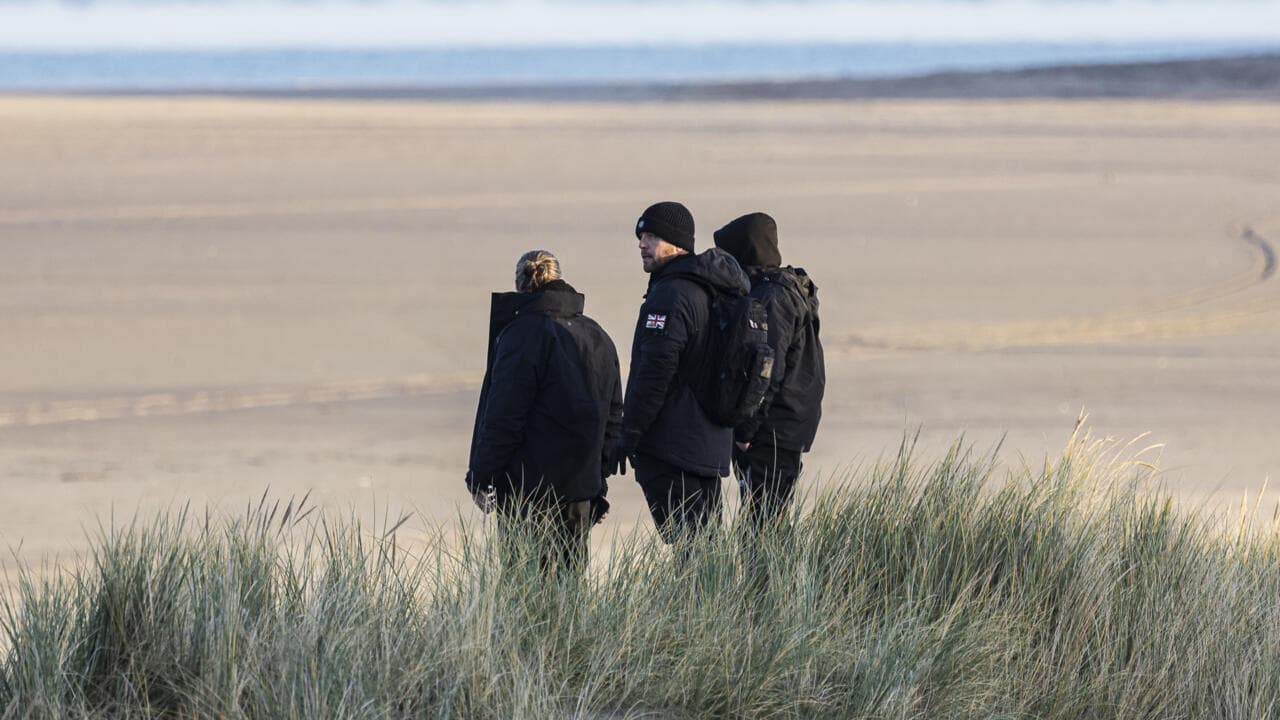
By Tuesday, personnel at the British sovereign base were involved in the search for Baumerter. The oligarch, who lived alone on the island, was last seen in Limassol, a coastal city favored by Russian immigrants, where he had a home. Cyprus has long been a haven for wealthy Russians, with its existence as a society earning it the nickname "Moscow by the Mediterranean."
Vironos, the police spokesman, said: "The operation to locate the Russian businessman is continuing." He said: "There are no indications so far of any link between the two."
One of the Western ambassadors based in Nicosia was skeptical, saying: "There may be plenty of conspiracy theories here, but I'd be surprised if they weren't connected."
Echoing that sentiment, another EU diplomat said: "Two words come to mind. Mysterious and sinister."
The Cypriot government, which has recently taken over the EU presidency, is also grappling with allegations of corruption that contain an online video, which has led to resignations at the highest level.
Christodoulides and his closest aides are in shock over the claims made in an eight-and-a-half-minute video posted online five days ago.
Cypriot officials have described the claims made in the video as not only "malicious" but "all signs point" to hybrid attacks Russia has carried out against other EU countries. The authorities suggest the "kompromat" video, posted on the social network X, is punishment for Christodoulides' pivot to the west, his tenure directly attributable to the small member state taking over the EU presidency.
They also suggest Russia was likely annoyed by the honorary guest at the January 7 ceremony, which opened the EU presidency, ვოლოდიმირ Zelensky, the Ukrainian president.
But officials say there is no link between the video and Panov's death or Baumerter's disappearance.
But the outrage over financial impropriety in the video, set in the presidential palace itself, shows no signs of abating.
Rather than resigning in the face of public outrage, the resignation of the chief of staff, Charalambos Charalambous, who is alleged to have offered access to the president for potential investors in exchange for money, and the resignation of the president's wife as head of a charity through which cash donations are allegedly channeled, appear only to be fueling calls for wider changes.
Charalambous described the video as "a set of deliberate distortions" and "selective editing," and on Monday, Christodoulides said he "had nothing to worry about" because his hands were clean.
"The president's image has been heavily damaged," said Hubert Faustmann, a professor of history and political science at the University of Nicosia.
"Many people believe the government's response is a classic diversionary tactic to deflect attention from the substance of the allegations by discrediting the source. There is no doubt that this is the biggest political crisis Christodoulides has faced since taking office."