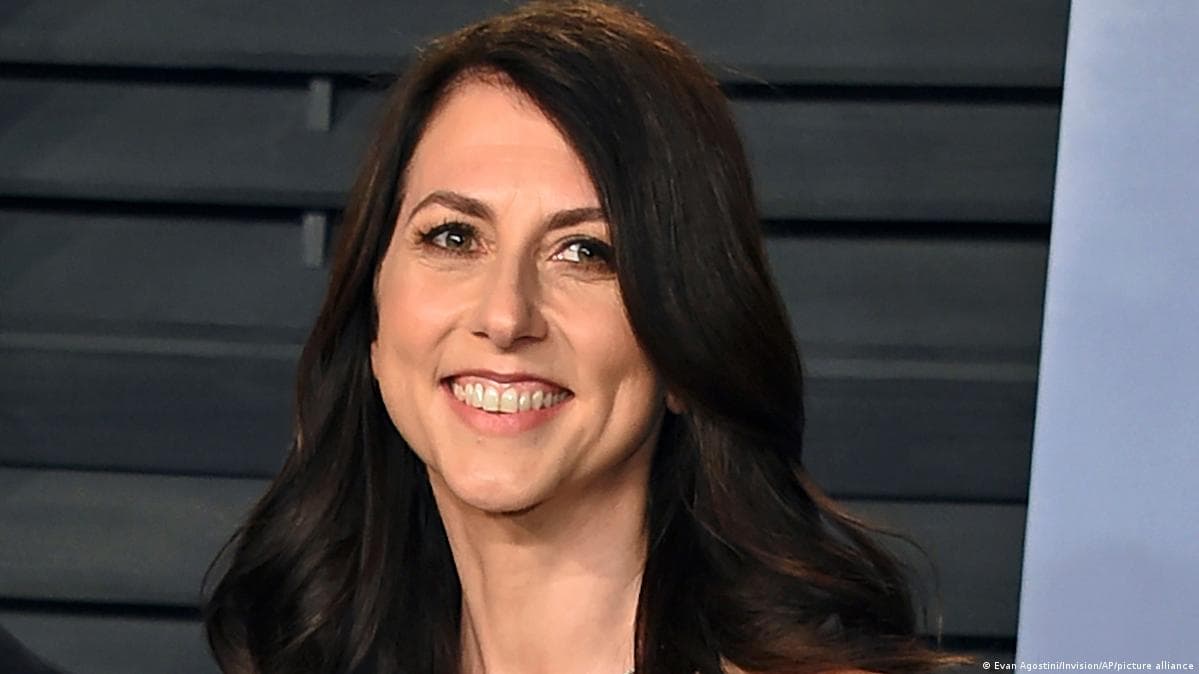
The philanthropist MacKenzie Scott revealed on Tuesday that she has donated $7.1 billion (€6.1 billion) to non-profit organizations in 2025. Her donations this year represent a significant increase in annual giving compared to previous years – which she acknowledged was $2.6 billion in 2024 and $2.1 billion in 2023. Scott is one of the wealthiest people in the world and Forbes estimates her net worth at around $33 billion, largely stemming from her stake in Amazon. She was married to Amazon co-founder Jeff Bezos until 2019. Here are the key points: Historically Black Colleges and Universities announce significant new funding Prior to Scott's public announcement, more than a dozen Historically Black Colleges and Universities (HBCUs) announced they had collectively received $783 million (€673 million) in funding this year, according to research by Marybeth Gasman, a professor at Rutgers University. Some institutions were first-time recipients, while others that had previously received support did not receive funding in this round. Gasman has tracked $1.35 billion (€1.16 billion) in Scott's giving to HBCUs since 2020. The United Negro College Fund (UNCF) confirmed receiving $70 million (€60 million), which it plans to invest in collective endowments for participating HBCUs. The Native Forward Scholars Fund, which provides scholarships for Native American students, also received $50 million (€43 million). Scott's donations are notable because they come without Scott's giving model remains notable because her donations come without application, restrictions, or reporting requirements. She does not have a public office or foundation, and organizations are typically informed of the gift through intermediaries. A 2023 study by the Center for Effective Philanthropy found that recipients generally did not struggle with the influx of unrestricted funds and did not see other donors withdraw as a result. California non-profit 10,000 Degree announced it received a $42 million gift this year. Its CEO, Kim Mazuca, said she confirmed the amount via phone after receiving the notification. The gift is about twice the organization's annual budget. Scott places her giving in the broader landscape of public generosity In her essay, Scott compared her multi-billion-dollar sum to the scale of everyday acts of charity. She cited U.S. data from 2020, stating "$471 billion" in charitable donations, billions of dollars in re-tippers, crowdfunding, volunteer labor, and salaries in the service sector. Scott also described early experiences where she was helped, including free dental services and a loan from a college roommate. Edited by: Roshni Majumdar