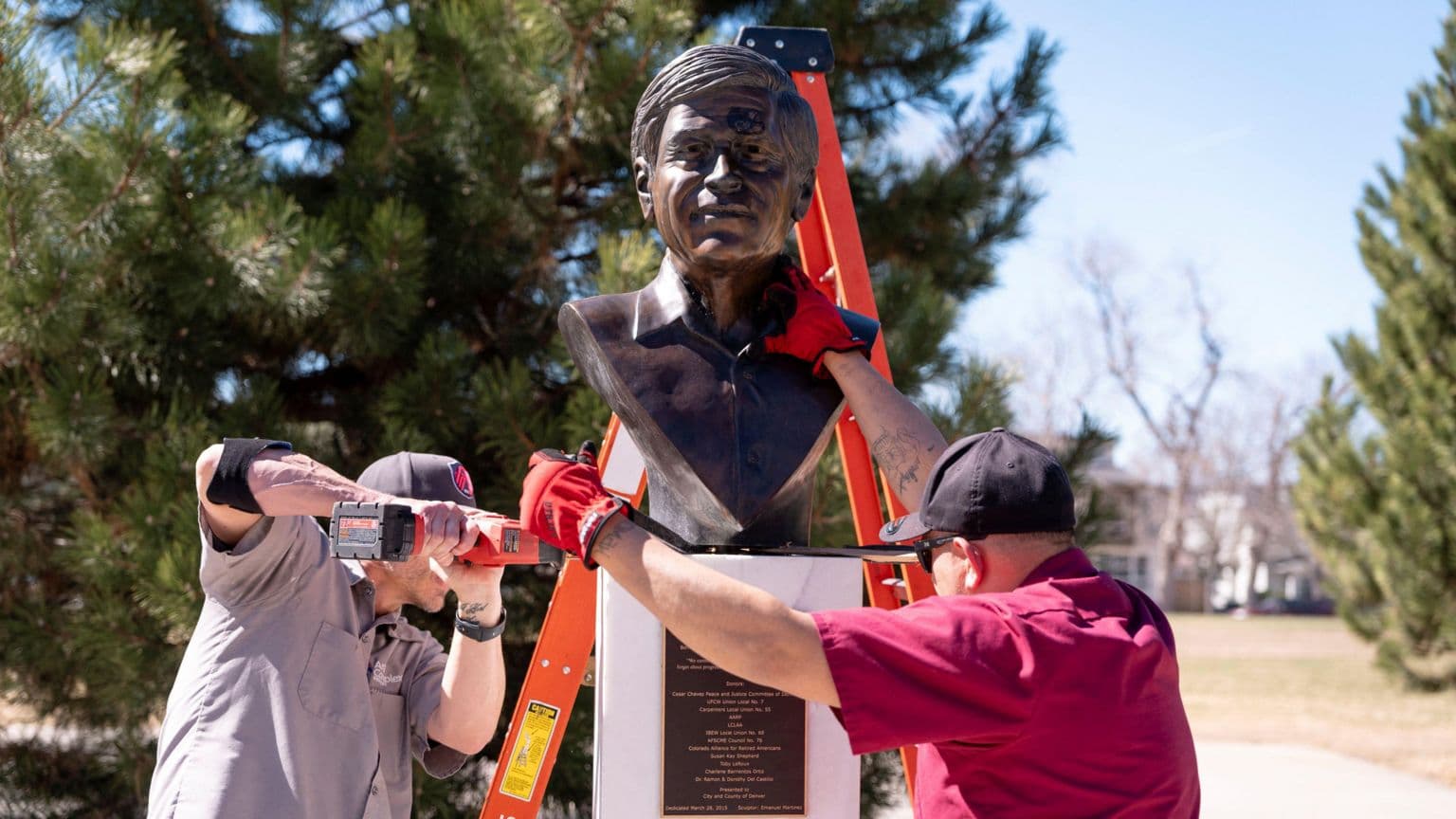
Farm work is personal for many people in California, where almost three-quarters of America's fruits and nuts are grown. That's why allegations of sexual misconduct against Cesar Chavez, a famous farm worker union activist, sent shockwaves throughout the state when they emerged in March. "As a daughter and granddaughter of farm workers, this is deeply personal," said state senator Suzet Martinez Valdarez during a meeting to discuss removing Chavez's name from streets, parks, and schools - and turning Cesar Chavez Day into Farm Worker Day. "The legacy of farm workers belongs to families like mine in California - not any single individual," said Valdarez, as she and other lawmakers shared stories about how their families worked in the fields picking crops under the scorching sun. As a labor organizer, Chavez led a major strike against grape growers in Delano in the 1960s, which sparked boycotts across the country to win better wages and conditions for workers. His slogan, "Si, se puede" - meaning "Yes, we can" in Spanish - was embraced by activists and politicians who came after him, and even used by Barack Obama's first presidential campaign. In 1994, Chavez was posthumously awarded the Presidential Medal of Freedom by President Bill Clinton, and in 2014, President Barack Obama designated March 31 as Cesar Chavez Day. But his legacy has been dramatically altered since Dolores Huerta, a civil rights leader, told the New York Times that he raped her decades ago. The newspaper's investigation also included testimony from two other women who were daughters of farm workers, who said he sexually assaulted them as minors in the 1970s. Huerta, now 95, said she kept silent about the sexual abuse because she feared it would harm the farm worker movement if she spoke up. Huerta is also a respected and beloved figure in the farm worker movement, with many schools and streets named in her honor - although not as many as Cesar Chavez. As a sign of how deep the wounds are after these allegations emerged, California lawmakers barely uttered her name when they unanimously voted last week to turn the state holiday into "Farm Worker Day." Similar votes are taking place across the United States, where Chavez's name is on dozens of schools, streets, and other public buildings across the country. Chavez statues have already been removed and murals defaced. But those who once hailed him as a hero say they cannot let these revelations overshadow the broader achievements of the labor movement. Los Angeles Mayor Karen Bass said she was "saddened" by the allegations against Chavez and that his memory is now "bittersweet." But she acknowledged his importance as a figure in the movement. "It was because of people like Cesar Chavez and Martin Luther King and other leaders that I made a vow as a child to dedicate my life to fighting for justice," she said. In Los Angeles' Watts neighborhood, artist Mr. Aleck changed a mural of Cesar Chavez he painted in 2021 and replaced it with a mural of Dolores Huerta. "As more allegations and more things came out, I felt a sense of responsibility to change the mural because it's my artwork," Mr. Aleck told a local ABC News affiliate. The new Huerta mural "illustrates the kind of person she was," he added. "It was a person who was at rallies, doing activism, speaking up for people, defending our rights." But some artists don't want to completely remove their memorial to the union leader. "I love bringing this mural into the 21st century," said artist JD "Zender" Estrada. He painted the mural in 1994 in the Boyle Heights neighborhood of Los Angeles, when the street was first named Cesar Chavez Avenue. It depicts Chavez being carried by four farm workers. Estrada disagrees with calls to remove Chavez from murals entirely and thinks they should be updated and repainted rather than "whitewashed." The artist believes Chavez could remain on murals, but be less prominent, until the public agrees. Zender also believes murals could better reflect the role of Filipino farm workers and others from other countries in the labor movement. "I really empathize with the victims of what happened," said Zender. "But we need to preserve and maintain the murals. They're important in Los Angeles." Estrada says he was commissioned to paint the mural by the Chavez Foundation and the city council in Los Angeles to educate people, because at the time very few people knew who Cesar Chavez was. There was a more famous boxer with the same name, he recalls. "And it's Hollywood," said Zender. "We love an icon."